
Live. Love. Embrace
“Mom, I want to go back to my other home! Why couldn’t we stay?!”
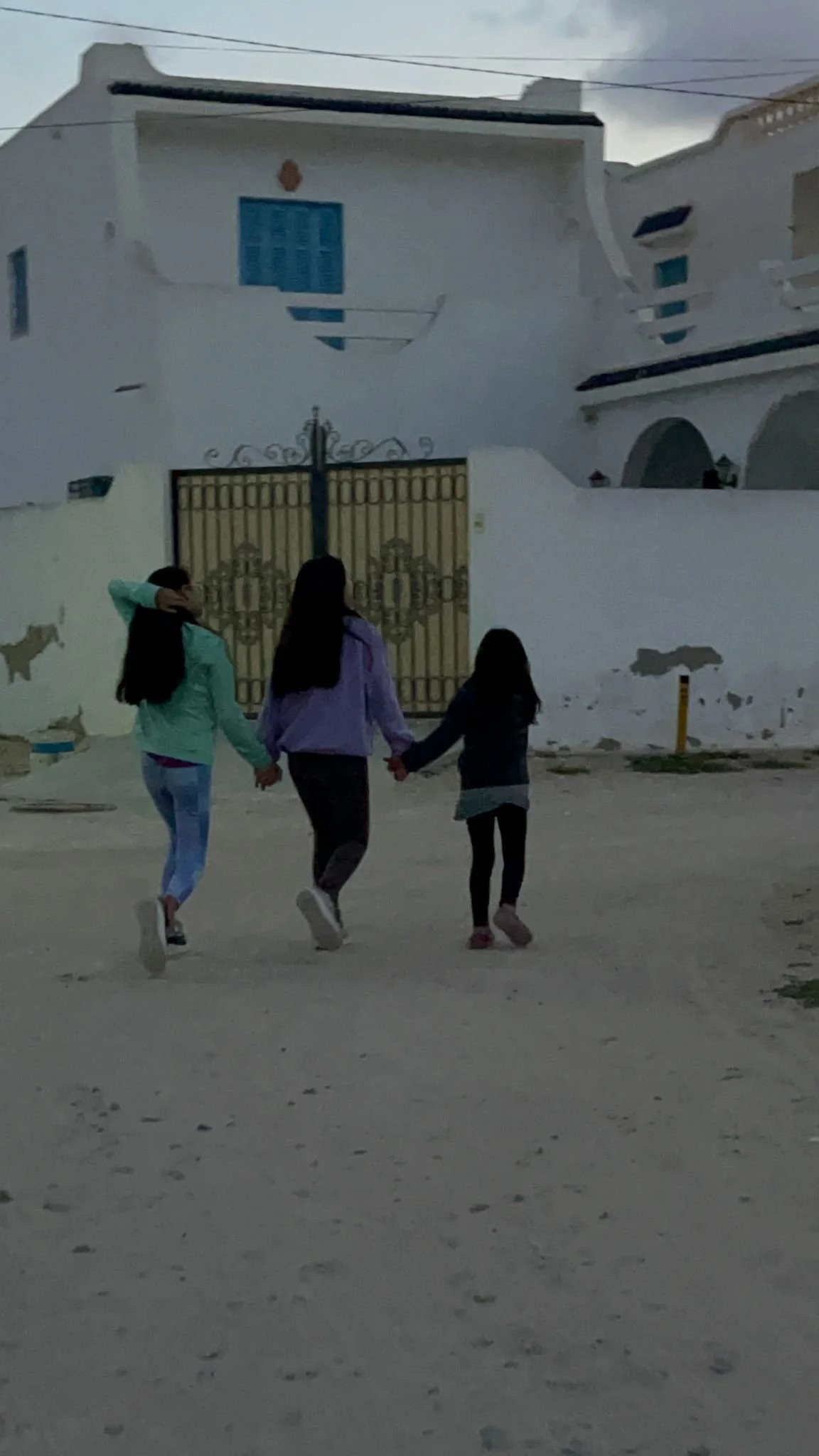
With grieving hearts, we left Morocco to move to another North African country. I had thought
that I would be serving in the same country until I retired, but the government decided
otherwise. We wondered if our family could learn to love our new community as much as our
beloved Moroccan family. Would we be able to embrace our new home just as much as our
previous one?
Although it was hard, we began to extend grace to one another as we grieved our previous
home while also embracing the beauty of our new country. We knew that loving where we live
would help us thrive. Loving the people, culture, and surroundings would not only make it more
enjoyable to live in, but it would also grow our hearts for our neighbors and future friends and
see them like Jesus does.
When I worked as a therapist and social worker, I taught families how to use the five senses for
their foster children, who struggled in attachment, to adapt, heal, and transition. Each sense
sends information to the brain, associating memories and feelings with experiences to help us
create an understanding of the world around us. Little did I know that integrating the five senses
into our family’s adaptation would become an integral part of gaining a deep love for our
community. Here are some examples of how we utilized our five senses to bring us into a
sense of belonging in the community:
Sight
Most people’s impressions and information are taken through our sense of sight. Because of
this, it was important for us to walk outside our home to observe daily rhythms, hand gestures,
where the most popular local places are, where people went grocery shopping, where people
congregated, and what potential favorite places would be that our family would enjoy together. I
remember taking my toddlers out to the open areas to sit, attempt to talk with others, and watch
children and adults interact with one another. Other times, we would walk to observe the
beautiful handcrafted pottery, woodwork, fabrics, and gold jewelry to understand the culture and
what is highly valued. My favorite is walking in nature, whether it is at the beach, desert, or
mountains and being in awe of the creation that the Lord has made around us. What a privilege
it is to dwell in such a beautiful country that is made by the “Creator of the ends of the earth!”
Hearing
Hearing allows people to learn how to communicate and create an understanding of safety.
Language learning is such a high value for our family as we NEED relationships. As an
American, I thought speaking was my goal, but I quickly needed to change my posture and
allow the people around me to teach me… best learned by listening. Listening to people speak
with their mouths, hand gestures, and facial expressions opened us up to their world. My
language teacher, friends, neighbors, people on the street, vendors, etc. all taught me a little
more about North Africans. Our family learned to laugh at our verbal and non-verbal
miscommunication errors and humbly accept that we were no expert. This opened doors to
friendships and new “adopted families” who still reminisce about our beginnings in country.
Touch
Touch is a sense that creates connection and releases oxytocin for pleasure. As one who did
not grow up with physical touch as a high value, I found it hard when ladies would kiss on the
cheeks with greetings. We learned to honor our host culture and began greeting with kisses,
including my children. As our relationships grew, kisses and a hug greeting became normal. I
was challenged by how Jesus touched the outcasted lepers, a blind man, little children, etc.,
and began embracing women as we shared, prayed, and cried together.
Smell and Taste
These senses send information the quickest to the brain and brings great emotion and
memories. Our family loves food, and food brings joy, opportunities, and validation. The first
month, we noticed what types of cookies were served, bought some local cookies, baked our
American cookies (that seemed to go with their “nutty” palate), and knocked on the doors of
neighbors. We knocked even if we knew moms were peeping through the windows and
“shushing” their kids. Over the years, those moms eventually opened their doors and began
inviting us over. Eventually, I found myself my own “North African mom,” friends, and neighbors
who gladly taught me how to cook and when to cook specific dishes. Ah, the joys of learning,
tasting, cooking, and laughing together in the kitchen and in the dining room.
Early on, we went to local restaurants, gravitating to the local restaurants that looked the most
“authentic,” without foreigners. We met restaurant owners and diners, asked about local
cuisine, and showed interest in their food. The more we enjoyed the food, cuisine, and people
behind the food, the more our community began to feel like our own.
-----
Loving where you live takes time, patience, and perseverance. It looks different in each family
and each person. Even within a family, each family member will take a different speed but we
continue to love and care for one another with grace. I am reminded of Hebrews 12:1-2 as it
says, “and let us run with endurance the race that is set before us, looking to Jesus, the founder
and perfecter of our faith, who for the joy that was set before him endured the cross, despising
the shame, and is seated at the right hand of the throne of God.” It is a deep pleasure and joy
to be in a community where God wants us to be whether in Africa, Asia, Europe, South America,
or North America. May we “live by the Holy Spirit” and thank Him continually for what He puts
before us.