

Trees and Tumbleweeds
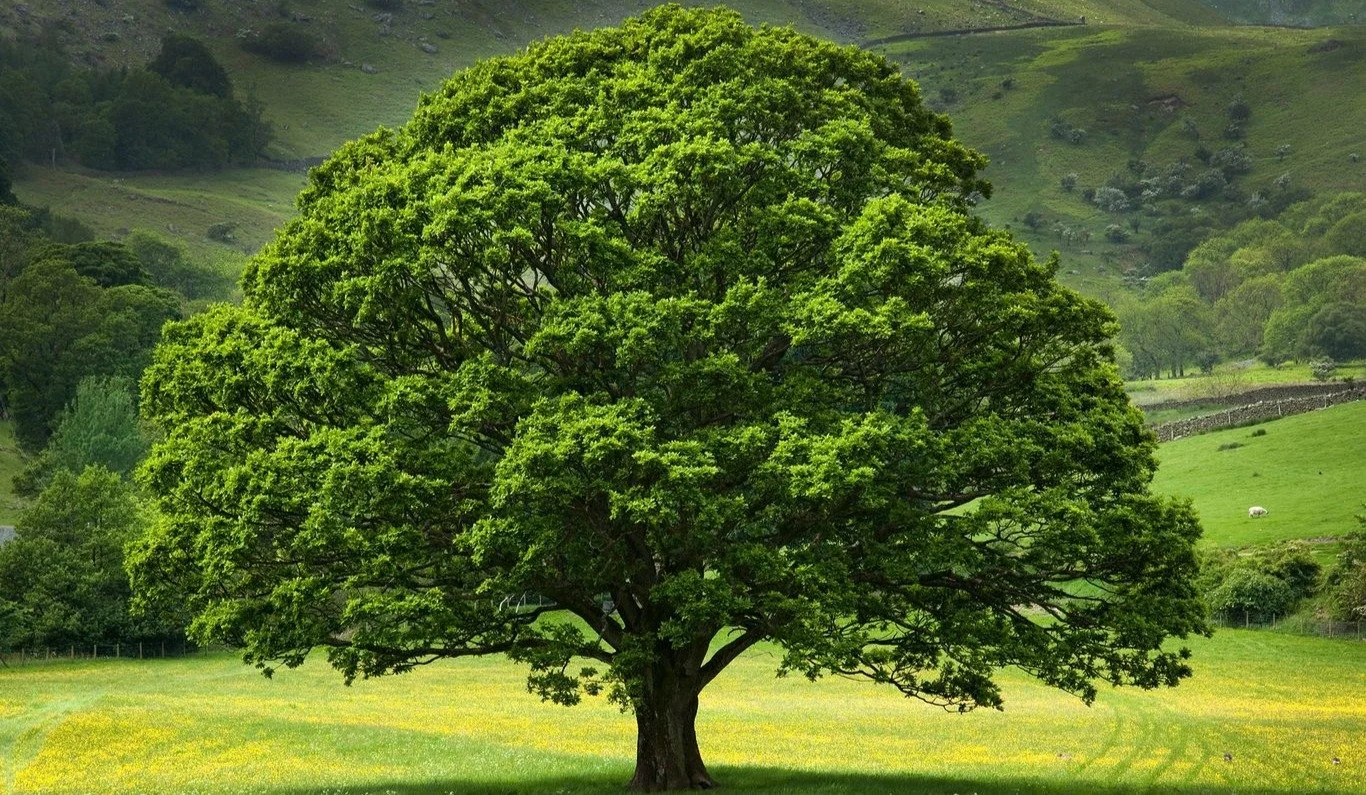
Strange that I should owe my favorite place in the world to an old leaning oak, considering that in my youth I favored tumbleweeds over trees. Years ago, my wife and I purchased a small parcel of land that featured a weathered, gnarly, large white oak leaning dramatically to one side. It testified that it had braced against many great windstorms and yet stayed standing, its thick bark pocked with scars from its battles with the elements. Sprawling in the shade of its spreading branches, we dreamed about our future home, and months later, as we marked out the house site, that old tree became the focal point of our layout.
It is really ironic that I would place so much emphasis on a tree, because in my younger years, I rolled through life more like a tumbleweed than an elm. I lived on the move, never pinning myself down by commitments and responsibilities. I lived for new sights, traveling with abandon to the next adventure. This approach to life defined the way I thought I wanted to live. I couldn’t be like a tree, stuck in the ground, watching the world go by.
Trees and tumbleweeds—a comparison aptly sketching modern culture. I was duped into believing that my best life was one of constant movement, coupled with the notion that the only way to find fulfilling adventure was to drift, commitment-free. It has taken me years to conclude that living like a tree is better.
The Bible’s wide array of wisdom literature on the subject of trees convinced me of this truth, and inspired me to take on the attributes of a tree—one planted, rooted, and steadfast, faithfully lifting arms in praise.
As a young adult, the lure of tumbleweed living held me tight, so I decided cross-cultural mission work would satiate my craving. I would see the world, experience new cultures, and do it all in the name of ministry. However, the romance quickly wore off, and I found myself feeling blown, tossed, and in need of a deeper root system as I faced the questions from critics I was supposed to be evangelizing. Doubts began forming around the edges of my soul, and amid the wanderlust, I realized I had to sink roots into Christ if I was ever going to make it in this world.
Later, I began working at a Christian camp that specializes in outdoor challenge and adventure. Thinking little of rootedness or longevity, I plunged into the work mostly because it held a draw of the unknown and adventure. I wanted to see over the next hill, climb the next mountain, and watch people change from the experience. Little did I know that I would be the one changing. I noticed fruit now and then, but mostly just a vague sensation that I was a sapling developing a little bit of bark that comes from facing some hard knocks.
Years into ministry, I came across Isaiah 61:1-3, and it stopped me in my tracks, emerging into one of my life passages.
“The Spirit of the Lord GOD is upon me, because the LORD has anointed me to bring good news to the poor. He has sent me to bind up the brokenhearted, to proclaim liberty to the captives, and the opening of the prison to those who are bound; to proclaim the year of the LORD's favor, and the day of vengeance of our God; to comfort all who mourn; to grant to those who mourn in Zion— to give them a beautiful headdress instead of ashes, the oil of gladness instead of mourning, the garment of praise instead of a faint spirit. They will be called oaks of righteousness, the planting of the LORD, that He may be glorified.”
It’s a classic “drop-the-mic-and-walk-off-the-stage” moment when Jesus, after quoting this passage in Luke 4:18-20, announces, “It’s fulfilled in me!” What I find most curious comes toward the end of Isaiah’s prophecy, where he states, “…that they may be called oaks of righteousness, the planting of the Lord, that He may be glorified.” Suddenly, I realized that a life lived in Christ and submitted to His lordship is not the life of a tumbleweed, being blown and tossed, never remaining anchored, and always aimless. The real life I want is the life of an oak of righteousness.
The trees we notice most are the big ones—thick bark and towering height. However, it started as a seed planted, implying a gardener’s intentional digging of earth, placing it in the ground, then cultivating the sprout. That’s the story of the people of God. It’s my story.
Growing where you're planted might feel like being stuck, but really, it’s rootedness. Tall trees have a great perspective and can spread a protective canopy over a forest of more fragile growing things. This takes patience and waiting, which is something a tumbleweed doesn’t do. No roots for tumbleweeds means no chance against the storms of life. Oak weather storms and raise arms to bring forth fruit and praise the Maker of heaven and earth. Psalm 92:12-13 says it well.
“The righteous flourish like the palm tree and grow like a cedar in Lebanon. They are planted in the house of the LORD; they flourish in the courts of our God.”
The other day, I watched my children gleefully swinging from the tire swing I hung from my oak tree’s limbs. My heart welled up as I considered my tumbleweed days, realizing I wouldn’t trade in the happy years of family life, faithfulness to a call, and passion for my Lord for the old thrills of aimless wanderlust. In rootedness, I had become a reliable friend, an anchor of faith, and a spreading shade of shepherding. My children went on singing and playing under the old tree’s stalwart shade, and I couldn’t help smiling since I, too, am an oak of righteousness.
.