

The Roundabout Routes of Roots
.
How to build what you need for long-term sustainability
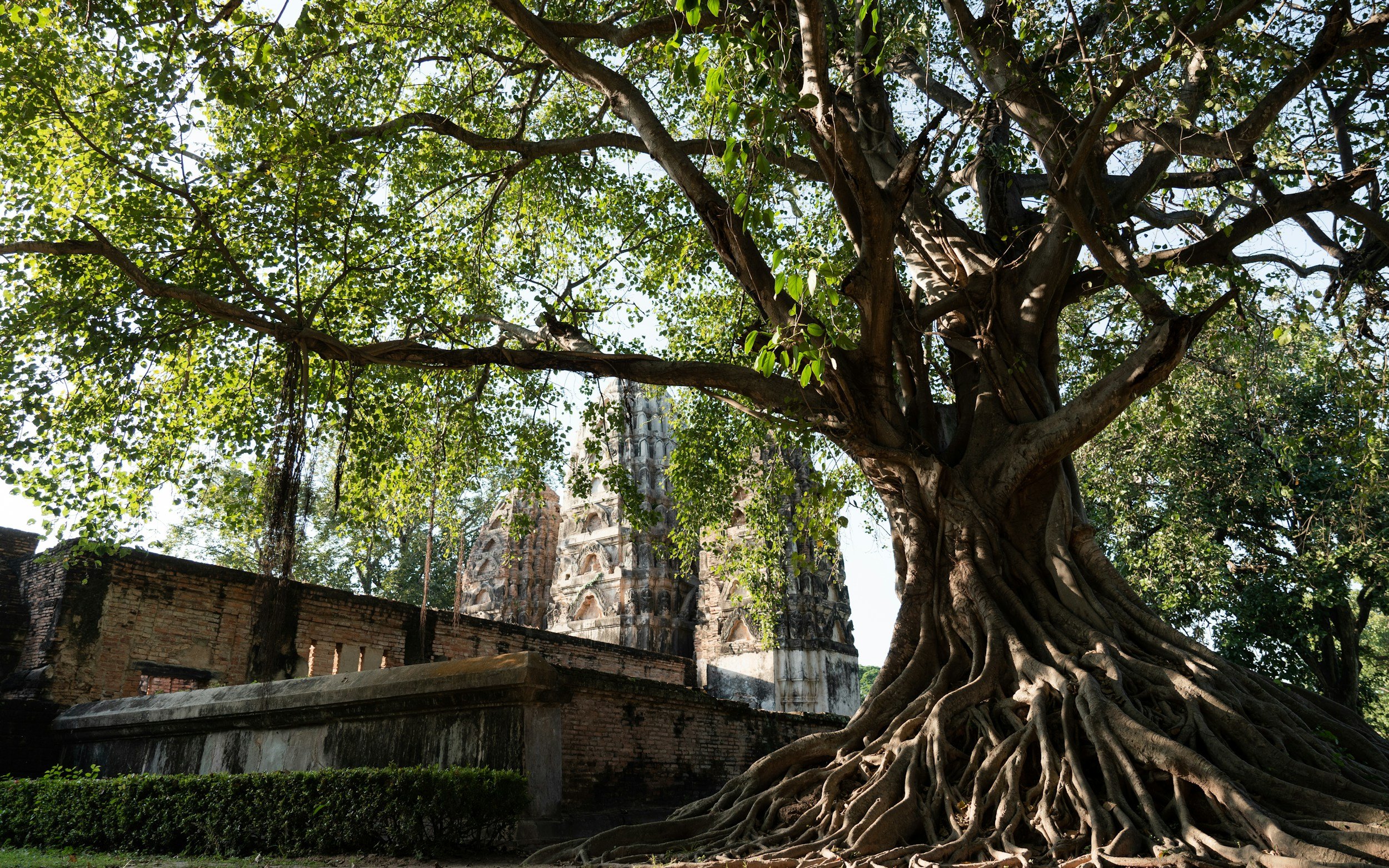
Worship swelled in my heart as I gaped up at His breathtaking creation here in Cambodia, the roots of a massive fig tree pouring over the ruins of Ta Prohm in Angkor Wat. Countless roots, the size of trunks themselves, wound and twined into an intricate latticework that simultaneously tears apart the ruins and holds them together. Wrapping themselves around walls as if the stone were not an obstacle but an invitation. As if what humans had built was of no concern in the pursuit of its goal.
A feat of nature, and indeed the nature of God, to fundamentally restructure the constructions of man into something more glorious than man could have conceived.
I suspect that roots are always beautiful, though Ta Prohm gave me the gift of being able to see them. We know that roots provide the support needed to stand strong over time, but we don’t often get to see how they overcome obstacles. Usually, roots exist politely in the ground, out of sight, out of mind. But this time the roots towered above me, navigating each obstacle in turn, before plummeting back into the earth, burying the beauty as they went.
The Challenge Roots Face
Deep roots help trees stand strong in the face of storms, and missionaries stand strong in the face of the relentless challenges in life and ministry.
But growing deep roots is a challenge in and of itself, especially living abroad.
When the environment isn’t inviting
When man-made constructions get in your way
When the nourishment is lacking
Growing deep roots isn’t always easy
And the storms keep coming
And well-meaning people in rich, fertile soil keep telling you to “grow deep roots.”
And you’re screaming past the storm into the heavens, “how exactly?”
We grow them like Ta Prohm.
Unorthodox.
Exposed. Breaking things apart as we hold it together.
The Anatomy of a Root System
My family has lived abroad for over 10 years, and I spent half that time living in Papua New Guinea. It was a land so fertile that you could literally stab a stick into the ground and it would grow, but metaphorical roots were harder. But I’ve been a diligent student of this work. Now I travel, helping missionaries and teams pinpoint this answer of “how exactly.”
I’ve researched the things that may come easily in more fertile soil and unearthed them, defining the lattice work that gives us the support system we need to stand strong in a storm. I call it the RISE Capacity Model, and RISE is an acronym designed to build your capacity.
In my research, I’ve found that individuals and teams who have all four RISE factors in place face challenges with more resilience (and less trauma) than those who lack some of the factors. It’s important to recognize that you’re not “needy” for needing these things. Everyone needs them, but in your context, you may need to take roundabout routes to get the root system you need.
Reset Tactics - Even as the storm rages around me, I can feel stable in myself.
Initiative - I can do something to make this situation better, 10% or 100%
Social Support - I have people around me who have my back
Systemic Efficacy - I trust the systems in place to make the situation better
A tricky thing about this list is that you either have it or it feels impossible to achieve. We all want these things, and we’d get them if we felt like we could. But there are obstacles, often related to where we find ourselves planted.
Here, the metaphor of Ta Prohm invites us to reach over, duck under, and break through obstacles.
Here are some of my favorite creative solutions:
A family that only used disposable dishes so they didn’t have to hand-wash dishes.
A woman who joined a virtual community to meet with friends online on a weekly basis.
A person who hired a leadership coach because they had no one to share the weight of leadership with on the field.
A team that invested in a premium medical evacuation insurance policy so they didn’t need to worry about “what if.”
Remember, this isn’t needy; it’s a need. A necessary and strategic investment for the longevity of your ministry in that allocation.
Investing in Roots
The roots in Ta Prohm not only hold up the tree, but they also hold everything together. In the same way, we’re not just talking about your wellbeing, but everyone and everything that depends on your wellbeing. Now that you are there, in that place doing ministry, things depend upon you. And if you were to fall because of insufficient root support, that could have ruinous effects.
It pains me how often I’ve heard missionaries wondering if their well-being is worth the cost. I know that when you slide your budget across the table, including line items for your paper plates, digital painting class, leadership coach, and medical insurance with coverage for international medical evacuation, there might be some awkwardness as people wonder if you really need all that. But when you consider the lifetime value of your work, the cost of sustaining you to do that work is negligible.
For most people, this root system exists politely out of sight. But as missionaries, we are familiar with living in a fishbowl. When you’re living in a context where you can’t get the roots you need out of sight, we take the lesson of Ta Prohm. The work that you do to overcome obstacles and establish the roots you need to be resilient through the storms is beautiful. We may not have wanted to show off our root system; we may have been more comfortable with it being politely underground. Nonetheless, the opportunity we have to showcase the latticework supporting us is, in and of itself, a ministry to those who behold the roundabout routes of our roots.